Business Analytics > Probability, Risk & Sampling > Sampling concepts and importance
Sampling concepts and importance
When collection all data from the entire population is impossible, impractical, or too expensive to test an entire population we need to collect a portion of the population. Selection of the portion of data instead of the entire population have to be unbiased and should be the proper representation of the population. By analyzing this smaller, manageable portion, researchers can save time and costs while obtaining insights that can be generalized to the entire group, such as in market research or scientific studies.
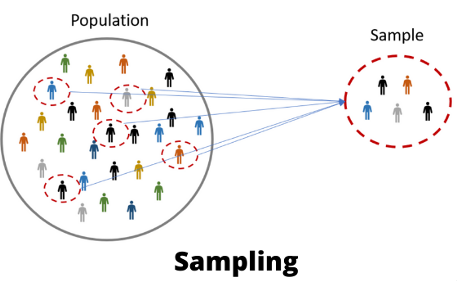
Sampling is the statistical process of selecting a representative subset of individuals, items, or data points from a larger population to make inferences about the whole.
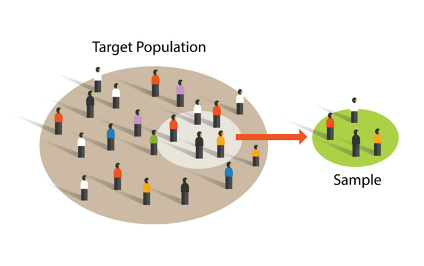
There two main types of sampling Methods: Probability Sampling and Non-Probability Sampling.
In probability sampling, every member has a known, equal chance of being selected, which minimizes bias and allows for strong statistical inferences. Examples include simple random, systematic, stratified sampling, and cluster sampling.
In non-probability sampling, Participants are selected based on non-random criteria, such as convenience, snowball sampling, or researcher judgment. This is easier but often less accurate.
Common Sampling Techniques
- Simple Random Sampling: Every item has an equal chance (e.g., pulling names from a hat), selection of individuals by lottery.
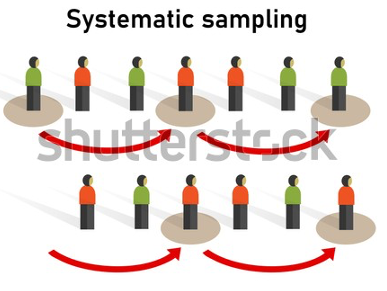
- Systematic Sampling: Selecting every n-th person, such as every 10th person in a list but selection of first one must be random i.e. by lottery.
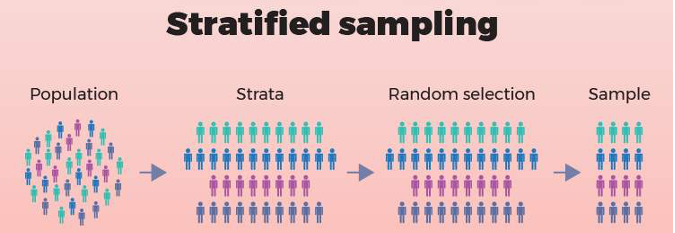
- Stratified Sampling: At first the entire population are divided into homogeneous group based on shared characteristics (e.g., gender, age, education, or religion) called subgroups (strata) and sampling from each group proportionately.
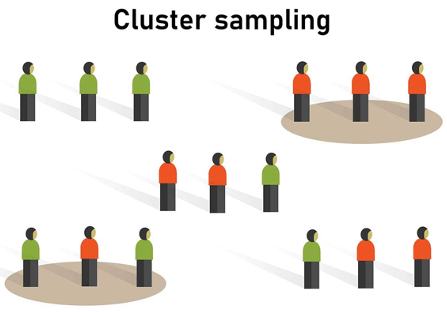
- Cluster Sampling: Cluster sampling is based on dividing a population into non-homogeneous subgroups (based on locality, administrative area called clusters. Then sampling a set of clusters, and conducting a complete census within the selected clusters. For instance, a company might segment its customers into small geographical regions. A cluster sample would consist of a random sample of the geographical regions, and all customers within these regions would be surveyed. This sampling might be easier because regional lists might be easier to produce.
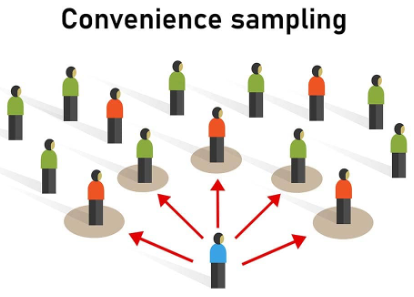
- Convenience Sampling: Using readily available participants, such as surveying the first 50 people walking by.
Variance of a Discrete Random Variable
No More
Feedback
ABOUT
Statlearner
Statlearner STUDY
Statlearner