Machine Learning > Sampling > What is Bayesian Analysis?
What is Bayesian Analysis?
Bayesian analysis is a statistical paradigm that answers research questions about unknown parameters using probability statements. What is the probability that a patient's blood pressure decreases if he or she is prescribed drug A?
Such probabilistic statements about the parameter are natural to Bayesian analysis because of the underlying assumption that all parameters are random quantities.
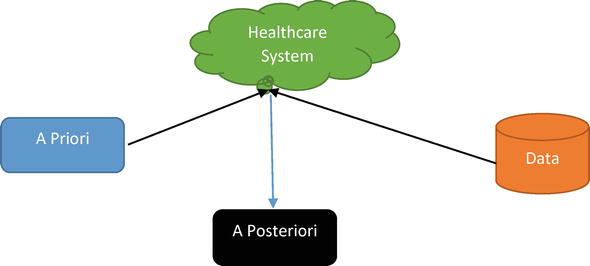
A posterior distribution comprises a prior distribution about a parameter and a likelihood model providing information about the parameter based on observed data. Depending on the chosen prior distribution and likelihood model, the posterior distribution is either available analytically or approximated by, for example, one of the Markov chain Monte Carlo (MCMC) methods.
Bayesian inference uses the posterior distribution to form various summaries for the model parameters, including point estimates such as posterior means, medians, percentiles, and interval estimates known as credible intervals. Moreover, all statistical tests about model parameters can be expressed as probability statements based on the estimated posterior distribution.
Feedback
ABOUT
Statlearner
Statlearner STUDY
Statlearner